

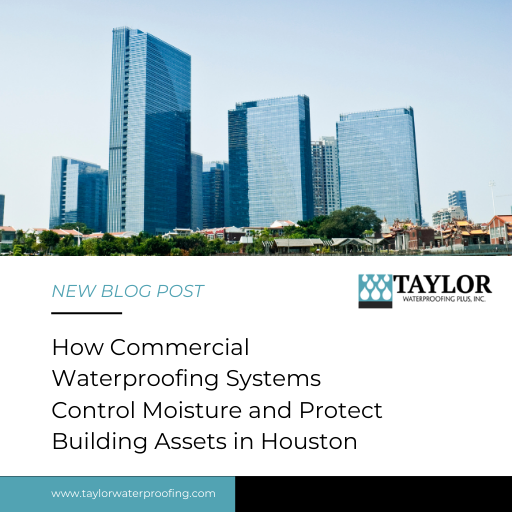
How Commercial Waterproofing Systems Control Moisture and Protect Building Assets in Houston
Moisture intrusion is one of the most underestimated risks facing commercial buildings in Houston. Persistent humidity, heavy rainfall, and prolonged environmental exposure place constant pressure on the building envelope. When moisture is not properly controlled, it quietly compromises structural performance, operational stability, and long-term asset value.
For facility managers, asset managers, property owners, and institutional decision makers, waterproofing is not a reactive repair. It is a strategic risk management tool that supports capital planning, protects asset value, and reduces long-term operational disruption.
Commercial waterproofing systems are engineered to control moisture before it penetrates the building envelope, migrates into concealed assemblies, or escalates into costly and disruptive damage.
Waterproofing as a Moisture Control and Asset Protection Strategy
Moisture naturally seeks pathways into commercial structures. In Houston’s climate, even small vulnerabilities can become recurring exposure points. Without a comprehensive waterproofing strategy, water can move through surfaces, joints, transitions, and penetrations that experience repeated environmental stress.
System-level commercial waterproofing controls this risk by:
- Creating continuous barriers that limit moisture intrusion
- Managing how water moves across and away from exposed surfaces
- Protecting vulnerable areas where moisture exposure is unavoidable
Rather than responding to visible leaks, effective waterproofing controls how water interacts with the building envelope from the outset. This approach reduces long-term risk and supports proactive asset protection.
How Moisture Moves Through Commercial Buildings
Moisture damage rarely appears immediately. In many commercial properties, water migrates slowly across materials, accumulates within concealed assemblies, or repeatedly impacts the same exposure zones over time.
Commercial waterproofing systems are designed with these realities in mind. They address:
- Horizontal surfaces exposed to frequent rainfall
- Vertical surfaces affected by wind-driven moisture
- Transitions between dissimilar building materials
- Areas subject to repeated or unavoidable exposure
By addressing moisture movement across the entire building envelope, waterproofing systems limit migration, accumulation, and hidden deterioration that often goes undetected until significant damage occurs.
High-Risk Areas Where Waterproofing Controls Moisture Exposure
Certain areas of commercial buildings face heightened moisture exposure and represent greater risk to overall building performance. System-level waterproofing focuses on protecting these high-risk zones to reduce moisture movement into adjacent components.
Common high-exposure areas include:
- Exterior surfaces exposed to consistent rainfall
- Elevated decks, walkways, and open-air assemblies
- Parking structures and traffic-exposed surfaces
- Vertical-to-horizontal transitions where water concentrates
Protecting these areas reduces moisture migration and helps preserve the integrity of surrounding building components.
Why Continuity Is Critical in Commercial Waterproofing Systems
Effective moisture control depends on system continuity. Gaps, weak points, or poorly detailed transitions allow moisture to bypass protective barriers, even when individual materials perform as intended.
Modern commercial waterproofing emphasizes:
- Seamless application to minimize entry points
- Reinforced detailing at transitions, joints, and penetrations
- Compatibility across materials and assemblies
A continuous waterproofing system functions as an integrated layer of protection across the building envelope, significantly reducing moisture-related risk.
Moisture Control and Long-Term Building Performance
Uncontrolled moisture exposure accelerates material degradation, disrupts operations, and increases lifecycle costs. Over time, this impacts capital planning, asset valuation, and insurance risk.
Commercial waterproofing supports long-term building performance by:
- Reducing moisture-related stress on building materials
- Stabilizing interior environmental conditions
- Minimizing recurring disruptions tied to moisture exposure
- Extending the service life of protected assemblies
For commercial and institutional properties, proactive moisture control supports operational reliability and long-term asset preservation.
Why Specialized Commercial Waterproofing Expertise Matters
Commercial waterproofing is a specialized discipline focused entirely on moisture control and building envelope protection. It requires a thorough understanding of water behavior, environmental exposure, material compatibility, and system integration.
Taylor Waterproofing has specialized in commercial waterproofing and building preservation since 1995. With decades of experience serving commercial, industrial, historical, and government properties, the firm delivers system-level solutions aligned with long-term asset protection and facility management goals.
This depth of experience ensures recommendations remain targeted, practical, and aligned with each building’s unique exposure conditions and capital planning priorities.
Moisture Risk Management Starts Before Damage Appears
The most effective waterproofing strategies are implemented before visible leaks, interior damage, or operational disruptions occur. Once moisture becomes apparent, the underlying exposure is often more extensive and costly to address.
For Houston commercial properties, proactive waterproofing is one of the most effective ways to manage moisture risk, protect the building envelope, and preserve long-term performance.
Assess Your Building’s Moisture Risk Today
Waiting for damage to appear can significantly increase repair costs, disrupt operations, and impact asset value. A professional waterproofing assessment provides clarity, control, and confidence in your building’s long-term performance.
Taylor Waterproofing partners with commercial decision makers to evaluate moisture exposure, strengthen building envelope systems, and support long-term asset protection.
Contact Taylor Waterproofing today to assess your building’s moisture risk and protect its value before problems surface.
📍 122 Berry Road, Houston, TX 77022
📞 713-691-1430
✉️ info@taylorwaterproofing.com
Taylor Waterproofing
Protecting Buildings. Preserving Value.
Commercial Waterproofing Services: A Must for Property Owners
Introduction
Managing a commercial property comes with no shortage of responsibilities, and protecting the building’s envelope is one of the most critical. In Houston’s hot, humid, and rainy climate, commercial waterproofing services are not just an upgrade—they’re a necessity. A strong waterproofing strategy can be the deciding factor between cost-effective preventive maintenance and sudden, costly structural failures.
Why Waterproofing Matters for Commercial Buildings
Unchecked water intrusion can lead to far more than surface damage. The consequences include mold growth, corroded materials, compromised structural elements, and potential building code violations. For properties that serve as offices, retail centers, or industrial facilities, the risks are even greater—affecting not just the building, but also tenants, employees, and valuable assets. Waterproofing provides both prevention and long-term durability, ensuring consistent performance.
What Commercial Waterproofing Services Include
Professional services cover a wide range of protective measures designed to meet the specific needs of each property. Common solutions include:
- Surface coatings: Elastomeric or acrylic coatings that protect exterior walls and roofs.
- Sealant installation: Applied to windows, expansion joints, and penetrations for watertight protection.
- Foundation & basement waterproofing: Below-grade systems that prevent groundwater infiltration.
- Roof waterproofing: Membranes and coatings that stop ponding and leakage.
- Masonry repair & sealant systems: Replacing deteriorated mortar, adding flexible sealants, and applying breathable barriers for lasting defense.
Warning Signs Your Property Needs Waterproofing
Early detection is key to avoiding extensive damage. Common indicators that a building may require waterproofing include:
- Water stains on ceilings or interior walls
- Musty odors from mold or mildew
- Paint peeling or plaster bubbling
- Cracks visible in walls or foundations
- White, chalky efflorescence on masonry surfaces
Houston’s Weather Challenges
Houston averages over 50 inches of rainfall per year and experiences high humidity nearly year-round. These conditions create constant pressure on building exteriors and foundations. Because of this, commercial waterproofing in Houston must be comprehensive, durable, and specifically adapted to the city’s unique climate.
Best Practices for Long-Term Protection
To ensure maximum effectiveness, property owners and managers should follow proven maintenance and inspection practices:
- Schedule annual inspections with waterproofing experts
- Use historically compatible materials when dealing with older buildings
- Apply breathable sealants to allow vapor escape without water intrusion
- Install or improve foundation drainage systems
- Prioritize regular roof maintenance to prevent leaks and ponding
Conclusion
In a city like Houston, waterproofing is not optional—it’s essential. From modern office towers to historic warehouses, every property benefits from a professional waterproofing plan. By investing in commercial waterproofing services, you not only save on costly repairs but also protect the people and businesses who depend on your building. Partner with a qualified provider to explore comprehensive solutions, including masonry repair, sealant systems, and below-grade waterproofing, to safeguard your property for the long term.